
June 17, 2026

5
min read
Self Assessment Deadlines: The Dates You Need to Know
Every Self Assessment deadline explained: when to register, file, and pay, so you never miss a date or face a fine.
Every Self Assessment deadline explained: when to register, file, and pay, so you never miss a date or face a fine.
Tax is stressful enough without a deadline sneaking up on you. The good news is that the Self Assessment calendar is fixed. The same handful of dates come round every year, and once you know them, there are no surprises.
Here are all the dates that matter, what each one is for, and what happens if you miss one. We have used the 2025/26 tax year as the example throughout, but the pattern is the same every year.
The UK tax year does not run January to December. It runs from 6 April to 5 April the following year. So the 2025/26 tax year started on 6 April 2025 and ended on 5 April 2026.
Everything you report on your Self Assessment return relates to that twelve-month window. The deadlines below all follow on from the end of that year.
If this is your first time filing, you need to register with HMRC before you can do anything else. The deadline is 5 October following the end of the tax year.
So for income earned in the 2025/26 tax year, you need to register by 5 October 2026. Registering is what gets you the reference number you need to file, and it is not instant, so it pays to do it early rather than leaving it until autumn.
If you have filed before, you can skip this one. You only register once.
If you file your tax return on paper, your deadline is 31 October following the end of the tax year. For 2025/26, that is 31 October 2026.
Most people file online now, which gives you three more months. If you are filing on paper, this is your cut-off, and it comes round noticeably earlier.
This is the deadline most people mean when they talk about the tax return deadline. For income earned in 2025/26, you must file your online return and pay any tax you owe by 31 January 2027.
Two things happen on this date. You file the return, and you pay the bill. They share the same deadline, so it is worth making sure you know what you owe well before the day itself.
This is also the busiest day of the tax year for HMRC, with hundreds of thousands of people filing at the last minute. Filing earlier means a calmer January and no risk of a technical hold-up costing you a fine.
This one catches first-time filers out. If your tax bill is over £1,000, HMRC asks you to make advance payments towards next year's bill, called payments on account.
There are two. The first is due on 31 January (alongside your main bill), and the second on 31 July. Each one is half of your previous year's bill.
The reason it surprises people is that in your first year, the January payment can be larger than expected, because you are paying last year's bill and the first instalment towards the next one at the same time. Knowing this in advance takes the sting out of it.
Miss the filing deadline and HMRC charges an automatic £100 penalty the day after, even if you owe no tax at all. Leave it longer and further penalties and interest start to build.
If you have already missed a deadline, do not panic, and do not bury your head. The single best thing you can do is file as soon as possible, because that stops the penalties growing. We cover exactly how the penalties work in a separate guide.
Three dates do most of the work:
Put them in your calendar once and the year takes care of itself.
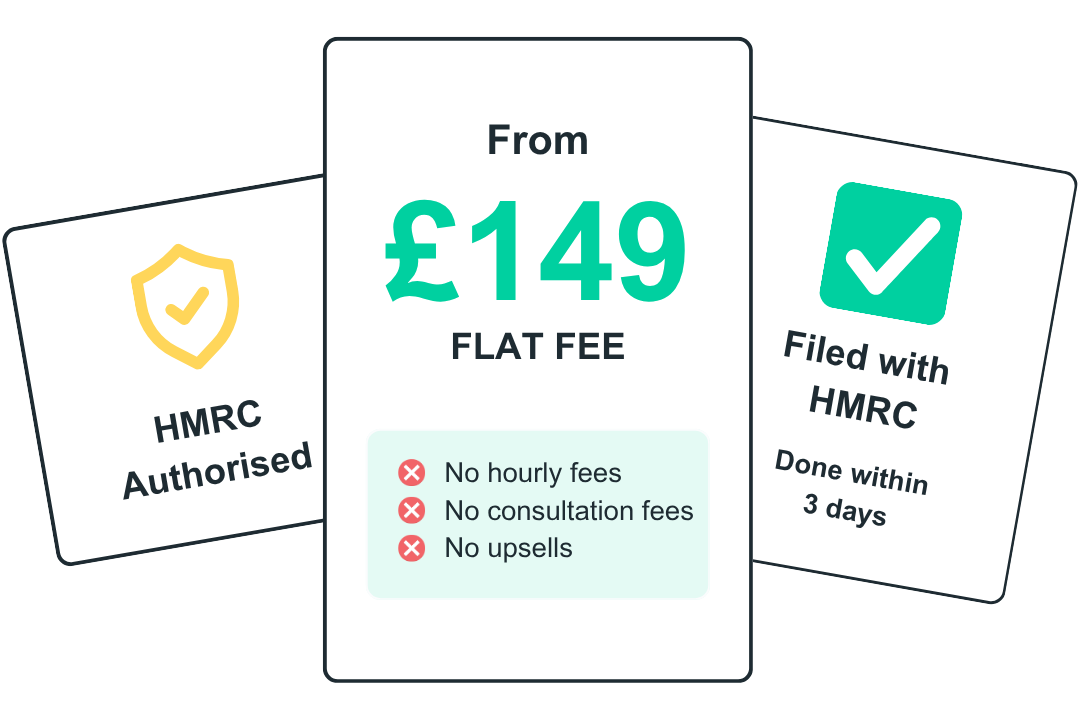
If keeping on top of dates is not how you want to spend your time, that is exactly what we are here for. A chartered accountant files your return properly and on time, so you never have to think about the deadline at all. A Simple Tax Return is £149, all in, with no hidden fees. You fill out one form, and we take it from there.
.png)
We’ll handle your tax return from start to finish.